


A hostile work environment in Alabama is more than a bad workplace.
It usually involves unwanted behavior based on a protected trait that is serious or happens often enough to make the workplace hostile. Federal laws protect workers from discrimination, but not all bullying at work is against the law.
Knowing the difference helps you spot warning signs, keep proof, and act before deadlines run out.
Hostile work environment Alabama cases often turn on context, not labels. In workplace harassment cases in Alabama, the law looks at the full record. Knowing how to document hostile work environment facts can help you build a stronger claim.

What qualifies as a hostile work environment in Alabama?
Title VII and the Americans with Disabilities Act (ADA) generally apply to private employers with at least 15 employees.
The Age Discrimination in Employment Act (ADEA) generally applies to employers with at least 20 employees.
Employer size matters, but workers at smaller companies may still have legal options. Ask a lawyer to review the laws that apply to your case.
Protected traits under federal harassment laws include race, color, religion, sex, national origin, and disability. They also include genetic information and age 40 or older. The law that applies depends on the facts. An offensive incident does not become a legal claim just because someone calls it harassment.
Courts look at the full setting, including:
- Frequency: Whether conduct happened once, now and then, or again and again.
- Severity: Whether it involved offensive remarks, serious threats, or physical misconduct.
- Threats and shaming: Whether the behavior was physically threatening or shaming rather than merely offensive.
- Work interference: Whether it got in the way of the worker's performance.
The standard is severe or pervasive, not severe and pervasive. A serious incident may qualify on its own, while repeated biased mistreatment may show an abusive pattern. No single factor controls the result.
Toxic work culture versus unlawful harassment
A toxic work culture can include bias, poor communication, unreasonable demands, or a manager who often belittles employees. Those problems matter, but they do not always create a discrimination-based hostile work environment. The link to a protected trait is the key difference.
Consider these sample situations:
- General hostility: A supervisor criticizes everyone harshly without mentioning protected traits. That conduct alone does not show discrimination-based harassment.
- Biased hostility: Coworkers repeatedly use racial slurs against an employee. The words and the pattern may support a hostile environment claim.
- Sex-based misconduct: A worker faces unwelcome sexual comments or touching. Severity, frequency, and context affect the legal review.
If you are learning how to document hostile work environment claims, focus on specific acts, not labels. Saying your manager is toxic shows how you feel, but sharing the exact words they used, who heard them, and how often it happened gives investigators clear details to review.
. The EEOC looks at the conduct and its context, not just the wording in a complaint.
Federal protections and Alabama employment law
When researching Alabama employment or labor laws, include both Alabama state laws and relevant federal laws, such as Title VII, ADA, FLSA, FMLA, and ADEA.
Title VII covers race, color, religion, sex, and national origin. Other federal laws cover disability, age, and genetic information. These laws are a good start for reviewing workplace harassment in Alabama.
Title VII and the Americans with Disabilities Act (ADA) generally apply to private employers with at least 15 employees.
The federal Age Discrimination in Employment Act (ADEA) usually covers employers with at least 20 workers.
Employer size matters, but smaller workplaces may still leave you with legal options. Ask a lawyer to review the rules that apply to your case.
Employer responsibility also depends on the harasser's role. If supervisor harassment leads to firing or another tangible job action, the employer may face automatic liability. Different rules apply when no tangible job action occurs.
For harassment by coworkers or people outside the company, the employer may be responsible if they knew or should have known about it.. The employer also must have failed to act fast with the right fix. The report and how management responds can help support your case.
Build a clear record and report specific conduct
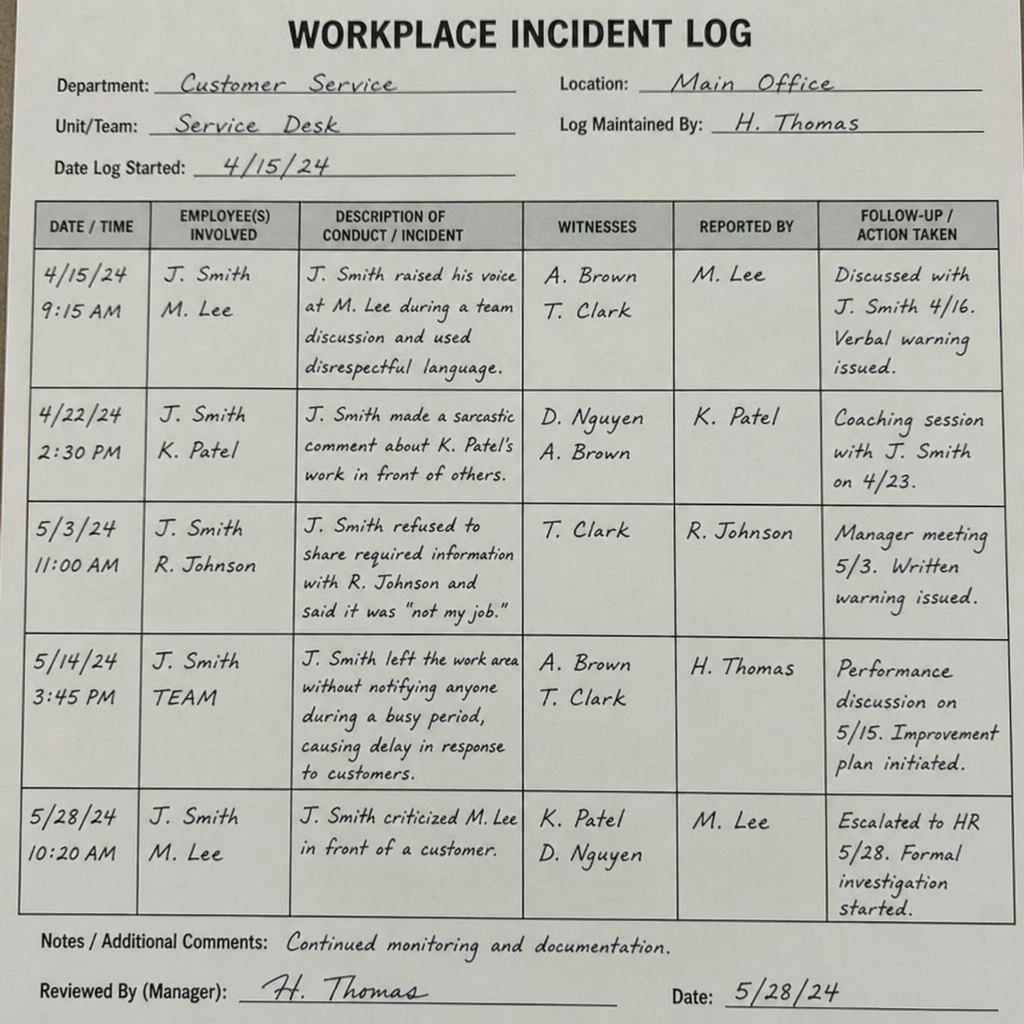
Start an incident log while events are fresh. Notes can become evidence, and related documents can help confirm what happened. Aim for accuracy, not drama. Separate what you saw from what someone else reported.
If you are learning how to document hostile work environment issues, use this checklist to organize your records:
- Incident details: Write the dates, approximate times, locations, exact words if you remember them, and actions taken.
- People involved: Name the person responsible and anyone who saw the incident.
- Supporting material: List emails, messages, photos, or other records.
- Notice to management: Record whom you told, when you reported it, and the response.
- Effects on work: Note interrupted tasks, missed shifts, or other clear results.
Review the employer's harassment policy and use an available reporting channel. If the policy gives you another way to report instead of going through the person involved, use that route. Explain the biased conduct clearly; do not rely only on the phrase hostile work environment. Early reporting gives management a chance to fix the problem.
A good written report might say:
I am reporting repeated comments about my national origin. The incidents happened on these dates, these coworkers saw them, and I want an investigation.
Change the wording to match your real experience; do not add facts you cannot support.
How long do you have to file a complaint?
For many federal discrimination claims in Alabama, you must file a complaint with the EEOC within 180 calendar days of the incident. For hostile work environment claims, earlier incidents may also count if at least one related incident happened within the filing deadline. Do not assume every later workplace problem revives a dead claim.
An internal HR investigation usually does not pause the EEOC deadline. Neither does an internal grievance or other informal process. Report internally when it makes sense, but track outside deadlines separately instead of waiting forever for management's answer.
Federal employees have a different process. They usually need to contact their agency's EEO counselor within 45 days. For Title VII claims, filing suit usually requires an EEOC charge and a Notice of Right to Sue. The lawsuit deadline is generally 90 days after you receive that notice. These are separate deadlines, not the same waiting periods.
Reprisal is a separate concern
Federal law bars retaliation for protected activity, including opposing discrimination or taking part in an EEOC case when the law protects that activity. Possible retaliation can include firing, unfair negative reviews, threats, or unwanted transfers when the facts meet the legal test. The main question is whether the employer acted because of protected activity.
Document changes after your report, including any explanation management gives. A complaint does not block fair discipline, and timing alone does not prove retaliation. A retaliation claim has its own rules, and it does not have to meet the same severe-or-pervasive test as the original hostile environment claim.
What is the average settlement for a hostile work environment in Alabama?
An average settlement number will not tell you your result. The remedies available depend on the legal claim, the harm you can prove, the employer's size, and other case facts. Instead of using an online number, look at what losses you can show and what remedies the law allows.
Possible relief may include back pay, restored job opportunities, attorney’s fees, and changes to unfair workplace practices.
Some intentional discrimination claims may also allow damages for emotional harm and out-of-pocket losses. In certain cases, punitive damages may apply.
Available remedies depend on the type of claim.
Federal law caps combined damages for some claims by employer size:
Employer size
Combined damages cap
15--100 employees
$50,000
101--200 employees
$100,000
201--500 employees
$200,000
More than 500 employees
$300,000
These are statutory limits for certain damages, not average settlements or guaranteed awards. Other forms of relief may be available separately.
Take the next step with specific facts
Start with a clear timeline: what happened, why it seemed biased, who knew, and how management responded. Keep your records organized and note the earliest deadline that may apply. If you want a personal review, take your records to an Alabama employment lawyer instead of relying on a label or settlement guess.
Frequently Asked Questions:
1. What qualifies as a hostile work environment in Alabama?
A hostile work environment occurs when an employee experiences severe or repeated unwelcome conduct based on a protected characteristic, such as race, sex, religion, age, or disability. The behavior must be serious or frequent enough to create an intimidating, offensive, or abusive workplace.
2. How can I prove a hostile work environment in Alabama?
You can support your claim by keeping records of inappropriate comments, emails, text messages, witness statements, complaints to HR, and other evidence of workplace harassment. Documenting when incidents occurred and how your employer responded can also help support your case.
3. Can I sue my employer for creating a hostile work environment in Alabama?
Yes, you may be able to take legal action if the harassment violates federal or applicable state employment laws. Depending on your situation, you may need to file a complaint with the Equal Employment Opportunity Commission (EEOC) before pursuing a lawsuit. An employment attorney can help evaluate your options and explain applicable filing deadlines.